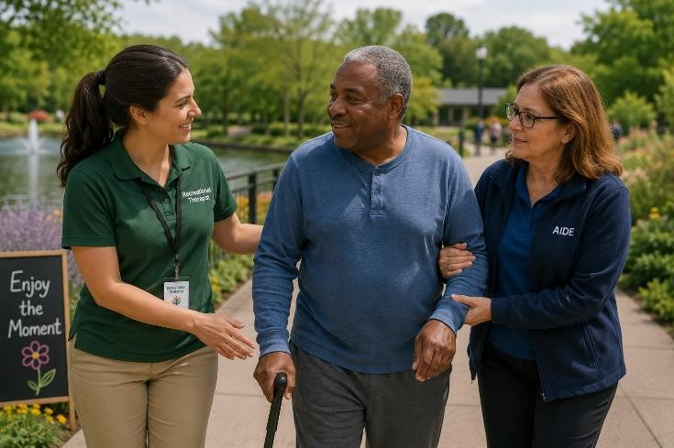
This article, authored by Bruce W. McCollum, MHA, Clinical Reimbursement Expert, provides practical guidance on the application of Recreational Therapy within Michigan’s No-Fault system. Drawing on extensive reimbursement experience, it clarifies coding standards, providerqualifications, and the distinction between therapeuticservices and general recreational activities. The discussion is intended to help providers ensure compliance, strengthen documentation, and maximize appropriatereimbursement while avoiding common billing pitfalls associated with recreational and attendant care services.
Michigan’s No-Fault insurance system has long recognized the importance of comprehensive,multidisciplinary rehabilitation for individuals recovering from catastrophic injuries. Among these services, Recreational Therapy (RT) plays a critical role in restoring functional independence, cognitive engagement, and psychosocial well-being. However, questions persist among providers regarding appropriate billingpractices, qualified personnel, and the distinction between therapeutic activity and general recreation.This article provides guidance on the most commonly used procedure codes, staffing qualifications, allowable therapeutic activities, and billing considerations, including the role of attendant care services under code S5125.
Common Procedure Codes for Recreational Therapy:
Under Michigan No-Fault, Recreational Therapy services are generally billed using CPT and HCPCS codes that reflect therapeutic intervention rather than leisure activity. Frequently used codes include:
- 97110 – Therapeutic exercises (strength, endurance, range of motion)
- 97112 – Neuromuscular re-education
- 97530 – Therapeutic activities (functional performance)
- 97535 – Self-care/home management training
- 97750 – Physical performance testing
- S9472 – Recreational therapy (non-physician service)
Of these, 97530 and S9472 are most often associated with structured Recreational Therapy programming when properly documented and tied to functional goals.
Qualifications of Personnel:
Recreational Therapy must be delivered by appropriately qualified individuals to be reimbursable. In the Michigan No-Fault context:
- A Certified Therapeutic Recreation Specialist (CTRS) is considered the gold standard.
- Licensed clinicians (OT, PT, Speech Therapists) may incorporate recreational modalities within their scope of practice.
- Services must be prescribed or ordered within a plan of care developed by a physician or authorized provider.
Unlicensed staff or aides may assist, but they cannot independently provide billable therapeutic services. Their role must be clearly supervised and documented.
Role of Support Personnel:
Support personnel—including therapy aides and rehabilitation assistants—play an important role in facilitating patient participation. However:
- They do not independently bill for therapy services.
- Their activities must be incident-to a qualified provider’s treatment plan.
- Documentation must reflect direct supervision and clinical oversight.
In many cases, their involvement may be more appropriately billed under attendant care services (S5125) rather than therapy codes, depending on the nature of the service provided.
What Qualifies as Recreational Therapy?
To qualify as reimbursable Recreational Therapy, activities must be:
- Goal-oriented (e.g., improving memory, mobility, social interaction)
- Structured and documented
- Clinically necessary and tied to injury-related deficits
- Progress-monitored
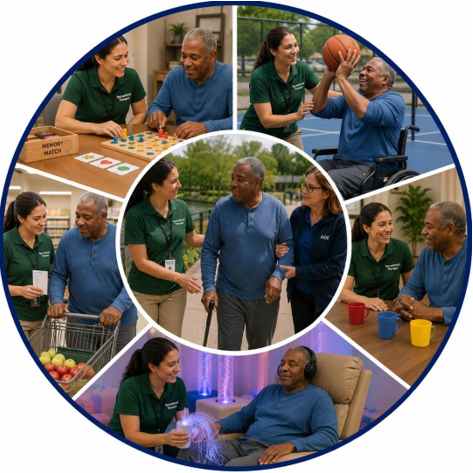
Examples of legitimate RT interventions include:
- Cognitive games to improve memory and executive function
- Adaptive sports for coordination and mobility
- Community reintegration exercises (e.g., supervised shopping tasks)
- Social skill development groups
- Sensory stimulation activities for TBI patients
The key distinction is that the activity must be therapeutic in intent and measurable in outcome, not simply recreational.
Reimbursement Rates and Billing Increments
Michigan No-Fault reimbursement is generally based on:
- Usual and customary charges
- Fee schedules established under post-reform guidelines (after June 11, 2019)
Billing is typically performed in 15-minute increments for timed CPT codes (e.g., 97530), following the 8-minute rule. Code S9472 may be billed per session or per diem depending on payer interpretation.
Providers should ensure:
- Time-based documentation supports units billed
- Activities align with billed codes
- Treatment notes justify medical necessity
On average, reimbursement for Recreational Therapy services under Michigan No-Fault, when billed using timed therapeutic procedure codes (such as 97530), typically falls within a per–15-minute range of approximately $20 to $45, depending on the payer, provider credentials, and applicable fee schedule reductions following the 2019 reform.
Higher rates are generally associated with services delivered by licensed or credentialed clinicians, while lower ranges may reflect non-physician services billed under HCPCS codes such as S9472. It is essential that billed units are fully
supported by time-based documentation and clearly demonstrate skilled therapeutic intervention to ensure payment at the upper end of the allowable range.

Concerts, Cruises, and Recreational Outings: Are They Billable?
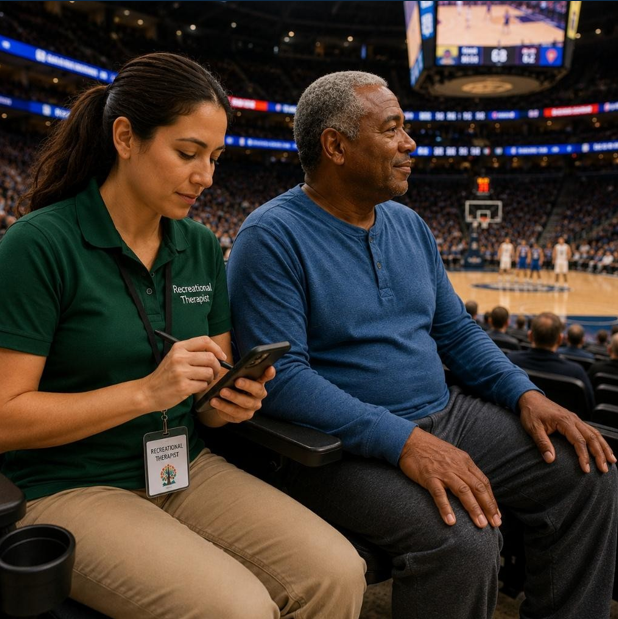
A common area of confusion involves whether activities such as concerts, sporting events, or cruises
qualify as Recreational Therapy.
In and of themselves, these activities are not considered reimbursable therapy.
However, they may be billable if and only if:
- They are part of a structured therapeutic plan
- There are clearly defined clinical goals (e.g., sensory tolerance,
social anxiety reduction)
- A qualified professional is
actively providing therapeutic intervention during the activity
- Detailed documentation demonstrates how the activity addresses specific deficits
For example:
A crowded concert used to treat sensory integration issues or anxiety in a TBI patient, with structured exposure and clinician guidance, may qualify. Simply attending the event does not.
Use of Attendant Care (S5125)
Code S5125 – Attendant Care Services applies when services involve:
- Supervision for safety
- Assistance with activities of daily living (ADLs)
- Cueing, redirection, or behavioral support Attendant care is appropriate when:
- The individual requires non-clinical support during activities
- The service is custodial rather than therapeutic
- Support staff are assisting without delivering skilled therapy
In many recreational outing scenarios, attendant care—not therapy—may be the correct billing mechanism.
My Summary…
Recreational Therapy remains a valuable and reimbursable component of Michigan No-Fault rehabilitation when delivered appropriately. Success in billing requires a clear understanding of:
- Clinical intent vs. leisure activity
- Proper coding and documentation
- Appropriate staff qualifications
- Strategic use of attendant care services
Providers must ensure that every billed service is defensible, medically necessary, and directly tied to measurable patient outcomes. By doing so, they not only protect reimbursement but also uphold the integrity of care delivery within the No-Fault system.

Another Blog Post by Direct Care Training & Resource Center, Inc. Photos used are designed to complement the written content. They do not imply a relationship with or endorsement by any individual nor entity and may belong to their respective copyright holders.
| Follow us in the Social Stratosphere… | ||||
|


