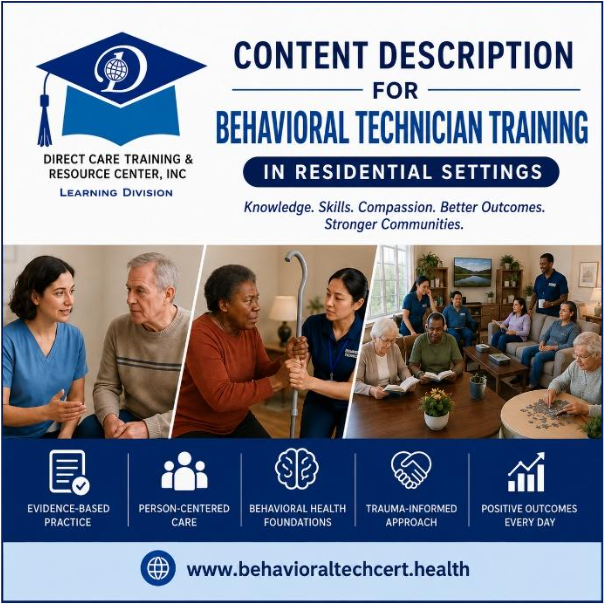
In today’s increasingly complex residential care landscape, providers are facing a convergence of challenges: higher acuity residents, more nuanced behavioral health diagnoses, co-occurring conditions, regulatory scrutiny, and a growing emphasis on person-centered, trauma-informed services. Against this backdrop, the need for comprehensive, current, and practical workforce training has never been greater.
The Behavioral Technician Training Program offered by Direct Care Training & Resource Center, Inc. (www.behavioraltechcert.health) stands out as a model for modern workforce development. Not only does it exceed traditional entry-level training expectations, but it also functions as a continuing education resource for administrators and leadership teams across adult foster care, group homes, and other regulated residential environments.
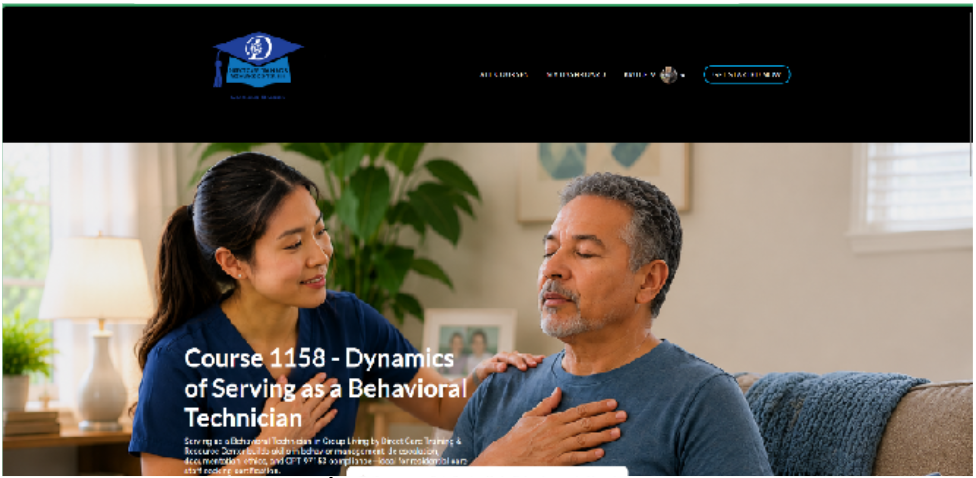
Why This Training Stands Apart
1. Designed for Today’s Behavioral Health Realities
Unlike outdated curricula that focus narrowly on basic care tasks, this program addresses current diagnostic trends and evolving behavioral presentations, including:
- Increased prevalence of dual diagnosis (mental illness + developmental disability)
- Greater awareness of trauma and its behavioral manifestations
- Rising need for functional skill development over custodial care
- Complex medication regimens and behavioral side effects
The curriculum’s Behavioral Health Foundations (Chapter 2) ensures technicians understand the interplay between:
- Mental illness
- Developmental disabilities
- Trauma exposure
- Co-occurring substance use or psychiatric conditions
This integrated understanding is critical for reducing misinterpretation of behaviors—one of the most common contributors to ineffective care.
Anchored in Person-Centered and Trauma-Informed Practice
At its core, the program reinforces that behavior is communication, and effective care begins with understanding the individual.
Person-Centered Framework (Chapter 1)
Technicians are trained to:
- Respect autonomy, preferences, and lived experience
- Maintain professional boundaries while fostering trust
- Align interventions with resident-driven outcomes
Trauma-Informed Approach (Chapter 2-4)
Through structured learning, staff develop the ability to:
- Recognize trauma triggers and behavioral responses
- Avoid re-traumatization in daily routines
- Respond with de-escalation rather than control-based methods
This is especially important in residential environments where residents may have long histories of institutional care or adverse experiences.
Addressing Bias and Building Better Environments
One of the most significant differentiators of the Direct Care Training & Resource Center program is its intentional focus on bias reduction and environmental design.
Recognizing and Managing Bias:
Behavioral technicians are guided to examine:
- Implicit assumptions about behavior and compliance
- Cultural differences in communication and expression
- Diagnostic overshadowing (misattributing behaviors to a primary diagnosis)
By embedding these concepts into daily practice and documentation (Chapter 4), the training helps reduce:
- Staff-resident conflict
- Misdiagnosis or mislabeling
- Inequitable treatment outcomes
Structuring Therapeutic Environments (Chapter 6)
The program emphasizes that environment is a clinical tool, not just a backdrop. Staff learn to:
- Create predictable routines that reduce anxiety
- Support independence through choice-making opportunities
- Balance structure with flexibility
- Promote dignity through normalized living conditions
This environmental focus is essential in shifting residential care from custodial models to therapeutic, growth-oriented settings.
Practical Skills That Translate to Better Outcomes
A key strength of the curriculum is its application-driven design, particularly in Chapter 3 (H2014-aligned interventions).
Core Competencies Include:
- Behavioral principles and reinforcement strategies
- Teaching functional skills embedded in daily living
- Managing challenging behaviors using least-restrictive interventions
- Data collection and progress tracking
These competencies align directly with payer, regulatory, and clinical expectations, ensuring that staff are not only trained—but accountable and measurable in their impact.
Strengthening Communication, Documentation, and Compliance
In today’s regulatory climate, documentation is not optional—it is foundational.
Communication & Documentation Excellence (Chapter 4)
The training prepares staff to:
- Communicate effectively with residents, families, and interdisciplinary teams
- Maintain clear, defensible documentation aligned with clinical and regulatory standards
- Uphold HIPAA and confidentiality requirements in daily operations
Compliance & Safety (Chapter 5)
Staff are also equipped with:
- Crisis prevention and intervention strategies
- Medication awareness (without overstepping scope)
- Incident reporting protocols that meet licensing expectations
This level of preparation supports survey readiness and risk mitigation, which are top priorities for administrators.
Dual Value: Workforce Training + Administrator Continuing Education
While designed for frontline staff, this curriculum uniquely serves administrators and program leaders as well.
For Administrators, the Program Provides:
- A structured framework for staff onboarding and competency validation
- Reinforcement of regulatory compliance standards
- Continuing education in:
- Behavioral health trends
- Risk management
- Documentation practices
- Person-centered service delivery
Because the training mirrors real-world regulatory and operational challenges, it allows leadership to:
- Standardize care practices across teams
- Improve staff retention through confidence-building
- Strengthen quality assurance systems
In effect, it becomes both a training tool and a management strategy.
A Comprehensive Curriculum That Builds Real Competence
The program’s six-chapter structure ensures a progressive, competency-based learning experience:
- Professional Role & Responsibilities
Establishes ethical, role-based foundations and person-centered care. - Behavioral Health Foundations
Builds diagnostic awareness and trauma-informed understanding. - Behavioral Interventions & Skill Development
Focuses on applied strategies that improve daily functioning. - Communication & Documentation
Strengthens team coordination and regulatory alignment. - Health, Safety & Crisis Response
Prepares staff for high-risk and emergency situations. - Daily Living Support & Environmental Structure
Enhances quality of life and independence for residents.
This integrated approach ensures that staff are not just trained in isolated tasks—but are capable of delivering holistic, effective care.
Conclusion: Setting a New Standard in Residential Care Training
The Behavioral Technician Training Program from Direct Care Training & Resource Center, Inc. represents more than a certification—it is a strategic investment in quality care.
By combining:
- Current behavioral health knowledge
- Bias-aware, person-centered methodologies
- Practical intervention skills
- Regulatory and documentation alignment
…it equips both frontline staff and administrators to meet the demands of modern residential care environments with confidence, competence, and compassion.
For organizations committed to improving outcomes, enhancing compliance, and building a resilient workforce, this training sets a new benchmark for excellence.
Learn more: www.behavioraltechcert.health
Chapter 1: Professional Role and Responsibilities of the Behavioral Technician
Intro 1: Content Description
Intro 2 – Learning Objectives
Lesson 1-1: Scope of Practice and Responsibilities
Lesson 1-2: Person-Centered Approaches in Residential Care
Lesson 1-3: Professional Boundaries and Conduct
Chapter 1 Post-Test
Chapter 2: Behavioral Health Foundations and Conditions
Lesson 2-1: Overview of Mental Illness in Residential Settings
Lesson 2-2: Developmental Disabilities and Functional Implications
Lesson 2-3: Co-Occurring Disorders and Dual Diagnosis
Lesson 2-4: Trauma-Informed Care Principles
Chapter 2 Post-Test
Chapter 3: Behavioral Interventions and Skill Development (H2014-Aligned)
Lesson 3-1: Principles of Behavior and Reinforcement
Lesson 3-2: Teaching Functional Skills in Daily Activities
Lesson 3-3: Managing Challenging Behaviors
Lesson 3-4: Data Collection and Progress Monitoring
Chapter 3 Post-Test
Chapter 4: Communication and Documentation
Lesson 4-1: Effective Communication with Residents
Lesson 4-2: Interdisciplinary Team Communication
Lesson 4-3: Clinical Documentation Standards
Lesson 4-4: Confidentiality and HIPAA in Practice
Chapter 4 Post-Test
Chapter 5: Health, Safety, and Crisis Response
Lesson 5-1: Basic Health Monitoring and Observation
Lesson 5-2: Medication Awareness and Support
Lesson 5-3: Crisis Prevention and Intervention
Lesson 5-4: Incident Reporting and Regulatory Compliance
Chapter 5 Post-Test
Chapter 6: Daily Living Support and Environmental Structure
Lesson 6-1: Supporting Activities of Daily Living (ADLs)
Lesson 6-2: Instrumental ADLs and Community Integration
Lesson 6-3: Structuring a Therapeutic Environment
Lesson 6-4: Promoting Independence and Choice-Making
Chapter 6 Post-Test

Another Blog Post by Direct Care Training & Resource Center, Inc. Photos used are designed to complement the written content. They do not imply a relationship with or endorsement by any individual nor entity and may belong to their respective copyright holders.
| Follow us in the Social Stratosphere… | ||||
|


