In Summer 2026, foodborne illness continues to dominate public-health headlines, reminding Michigan Adult Foster Care providers that kitchen safety is not an abstract compliance topic. A contaminated ingredient, an improperly cooled meal, or a missed recall can quickly become a serious health event. Residents of AFC homes may be older, medically fragile, immunocompromised, or managing chronic conditions that make the effects of foodborne illness more severe than they would be for the general population.
For direct care staff, safe food handling is therefore part of the home’s duty to provide protection, supervision, and dependable daily care. Food safety begins long before a plate reaches the dining table. It includes inspecting deliveries, checking expiration dates, storing food promptly, preventing cross-contamination, washing hands correctly, monitoring cooking temperatures, honoring allergy and special-diet instructions, and knowing how to respond when a food recall is announced.
a. Food Safety Begins With the People Preparing the Meal
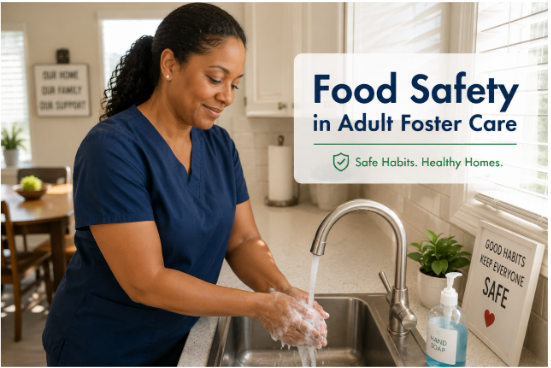
The most important food-safety system in an AFC home is a staff team that understands why each preventive step matters. Handwashing must be completed at the correct times and with the correct technique, not treated as a quick formality. Cutting boards, utensils, counters, and storage containers must be managed so raw meat, poultry, seafood, and eggs do not contaminate ready-to-eat foods. Gloves can support safe food preparation, but they do not replace clean hands or thoughtful work practices.
The Clean-Separate-Cook-Chill framework gives staff a practical structure. Clean hands and surfaces reduce the movement of harmful organisms. Separating raw foods from prepared foods limits cross-contamination. Cooking foods to safe internal temperatures destroys many pathogens. Chilling food promptly slows bacterial growth and protects leftovers intended for later use.
b. Temperature Control Is a Daily Risk-Management Responsibility
Food can look, smell, and taste normal while still being unsafe. That is why visual judgment alone is not enough. AFC kitchens need working food thermometers, reliable refrigeration, clear storage practices, and staff who understand the importance of the temperature danger zone. Cooked foods should be checked at the thickest portion, and refrigerator and freezer temperatures should be monitored consistently rather than only when a problem is suspected.
Safe cooling and reheating practices are equally important. Large containers of hot food cool slowly and may remain at unsafe temperatures for too long. Dividing food into shallow containers, labeling and dating leftovers, and using established discard rules help prevent yesterday’s meal from becoming tomorrow’s incident. These practices also create consistency across shifts, especially when different staff members prepare, serve, store, and reheat food.
c. Recalls, Deliveries, Allergies, and Special Diets Require a System
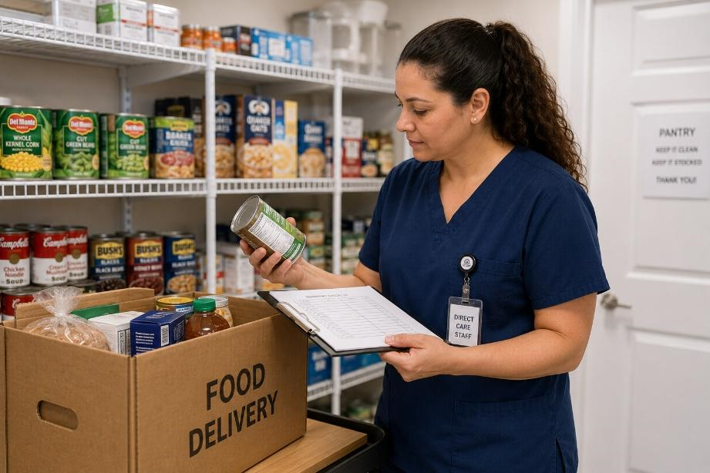
Current outbreak reporting makes recall readiness especially important. AFC homes need a simple process for reviewing notices, identifying affected products, isolating or discarding recalled food, documenting the response, and communicating across shifts. Staff should also reject damaged packaging, swollen cans, leaking products, unsafe delivery temperatures, and expired or questionable items.
Allergy and special-diet instructions require the same level of discipline. A resident’s meal plan may reflect a diagnosed food allergy, swallowing concern, diabetes management plan, renal diet, texture modification, or another medical need. Staff must understand that substitutions made for convenience can create risk. Clear labeling, separate preparation when necessary, accurate service, and communication between the kitchen and direct care team are essential.
Written procedures should identify who checks deliveries, how refrigerator temperatures are recorded, where recall information is reviewed, how leftovers are labeled, and what staff must do when safety is uncertain. A consistent system protects residents and gives employees a dependable process.
d. Training Must Reflect Real AFC Kitchen Conditions
AFC kitchens are not restaurants, but they serve residents who may face serious consequences from unsafe practices. Training should be practical, repeatable, and connected to the actual work environment. New employees need orientation before assuming meal-preparation duties, while experienced staff benefit from annual refreshers and coaching.
Direct Care Training & Resource Center’s Food Safety in Specialized AFC Homes course is designed for these real-world conditions. The course addresses foodborne illness, handwashing, safe storage, temperature control, cross-contamination, kitchen safety, allergies, special diets, food recalls, delivery inspection, and the Clean-Separate-Cook-Chill framework. It can support new-hire preparation, annual training, and documented staff development across the organization.
e. Food Safety Protects Dignity as Well as Health
Meals are part of routine, choice, comfort, culture, and community life. A strong food-safety program allows residents to enjoy those experiences without unnecessary risk and reassures families, guardians, and healthcare professionals.
For administrators, the goal is not simply to avoid an outbreak or pass an inspection. The goal is to create a kitchen culture in which every staff member recognizes food safety as resident protection. Consistent procedures, effective supervision, and relevant training turn that expectation into daily practice.
Enroll Today – Food Safety in Specialized AFC Homes ($69.95)
Visit www.directcaretraining.com to prepare your team with practical food-safety training for Michigan Adult Foster Care settings.

Another Blog Post by Direct Care Training & Resource Center, Inc. Photos used are designed to complement the written content. They do not imply a relationship with or endorsement by any individual nor entity and may belong to their respective copyright holders.
| Follow us in the Social Stratosphere… | ||||
|


