
Executive Summary…
This is a Trade article and Blog providing general information for those involved in Doula Practice. In conjunction with Direct Care Training & Resource Center, Inc. we do provide 3 webinars on this subject throughout the year with a focus on reimbursement Doulas have become an increasingly recognized component of maternal health strategy across Medicaid and select commercial insurance programs in the United States. Evidence linking doula support to improved birth outcomes, lower cesarean rates, and reduced disparities has driven policy action in more than 40 states and the District of Columbia. However, coverage has outpaced consistent billing infrastructure, leading to confusion, underpayment, claim denials, and administrative burden for both doulas and payers.
This article examines:
- What Medicaid and insurers are actually paying for doula services
- Common CPT/HCPCS billing codes and modifiers
- Frequent billing failures and compliance risks
- A practical Doula Billing Cheat Sheet for providers and billers
Reminder: Billing and coding data change frequently. Be sure and check specific state and insurer requirements.
The Expanding Role of the Doula…
Doulas provide non-clinical emotional, physical, and informational support before, during, and after pregnancy. Unlike licensed clinicians, doulas function under preventive or supportive health service authorities and typically bill using HCPCS “S” and “T” codes, not traditional E/M CPT codes.
Medicaid agencies increasingly categorize doula services as:
- Preventive services (per §1905(a)(13) of the Social Security Act)
- Maternal health supports
- Health equity interventions tied to social determinants of health (SDOH)
Between 2022 and 2025, nearly all states have implemented or authorized Medicaid reimbursement models for doulas, with payment structures varying significantly by state and delivery system. [ccf.georgetown.edu], [nashp.org]
What Medicaid Is Paying for Doula Services (Selected States) California (Medi-Cal Fee-for-Service and Managed Care)
As of January 1, 2024, California increased doula reimbursement to align with targeted provider rate increases:
- Initial prenatal visit (90 min): $197.98
- Prenatal or postpartum visit: $162.11
- Extended postpartum visit (3 hrs): $486.36
- Vaginal delivery support: $685.07
- Cesarean delivery support: $795.73
- Miscarriage or abortion support: $250.85
These rates apply to enrolled and contracted doulas and represent one of the most comprehensive state fee schedules nationally. [dhcs.ca.gov]

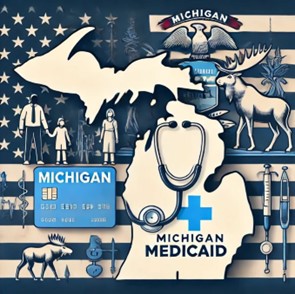
Michigan Medicaid (Fee-for-Service)
Michigan expanded payment and visit limits effective October 2024:
- Prenatal or postpartum visit: $100.00 per visit (HCPCS S9445)
- Labor & delivery support: $1,500.00 per pregnancy (HCPCS T1033)
- Six total prenatal/postpartum visits per pregnancy
Labor support must be delivered in person and billed for inpatient hospital settings only. [michigan.gov], [michigan.gov]
Illinois Medicaid…
Illinois implemented a statewide doula fee schedule effective February 1, 2024, covering prenatal, delivery, and postpartum services. Payment levels vary by visit type and are published annually by the Department of Healthcare and Family Services. [hfs.illinois.gov]
Oregon & Washington (Apple Health)…
Both states utilize global or bundled doula benefits, allowing a single global payment or partial line-item billing when care is not completed. These models emphasize continuity and outcomes but introduce documentation and timing complexities. [oregon.gov], [hca.wa.gov]
Common Doula Billing Codes (HCPCS/CPT)…
Because Medicare does not recognize doulas as billable providers, no standard CPT codes exist. Medicaid and managed care plans rely primarily on HCPCS Level II codes:
| Code | Description | Typical Use |
| S9445 | Patient education, non-physician | Prenatal/Postpartum visits |
| T1033 | Doula birth worker services, per diem | Labor & delivery support |
| H1005 | Alcohol/drug services (used in some states) | Limited behavioral integration |
| Z33.1 / Z39.2 | ICD-10 diagnosis codes | Pregnancy / postpartum status |
CMS maintains these codes as state-directed Medicaid options, not Medicare-paid services. [cms.gov]
Common Modifiers Used in Doula Billing
| Modifier | Purpose |
| HD | Pregnancy-related or high-risk services |
| 95 | Telehealth (when allowed by state policy) |
| U1–U4 | State-specific tracking or benefit tiers |
| GT | Legacy telehealth modifier (some plans only) |
Incorrect or missing modifiers are among the top three causes of claim denials in doula billing audits reviewed by Medicaid agencies. [michigan.gov]
Doula Billing Cheat Sheet… Before Billing:
- Enroll as a Medicaid provider (NPI required)
- Register with state doula registry (if applicable)
- Confirm managed care plan credentialing
- Verify benefit limits per pregnancy
On the Claim…
- Use HCPCS S or T codes, not CPT E/M
- Attach correct pregnancy/postpartum diagnosis
- Apply HD modifier when required
- Indicate telehealth modifier only if permitted
- Bill labor support once per pregnancy
Documentation Must Include: - Date, duration, and type of service
- Client trimester or postpartum status
- Non-clinical support description
- Referring provider (if required)
- Informed consent confirmation
Billing Critiques and System Challenges…
Despite expanded coverage, several systemic issues persist:
1. State-by-State Fragmentation
Billing rules, codes, and payment rates vary widely, increasing administrative burden for multi-state doula organizations. [nashp.org], [ccf.georgetown.edu]
2. Undervaluation of Labor Support
Many states pay less for extended labor attendance than for brief clinical encounters, despite evidence of cost savings through reduced cesareans.
3. Managed Care Contract Gaps
Some Medicaid MCOs fail to load updated fee schedules promptly, resulting in payment delays even when state policy has changed. [dhcs.ca.gov]
4. Inconsistent Telehealth Policies
Prenatal education may be billable via telehealth in one state but denied in another, despite similar statutory authority.
Our Conclusion…
Doula reimbursement is no longer theoretical—it is operational. However, billing infrastructure has not yet matured to match policy intent. Accurate coding, modifier use, and payer-specific compliance are critical for sustainability. Organizations such as Direct Care Training & Resource Center, Inc. and Electronic Medical Services, LLC play a key role in bridging this gap through education, billing support, and systems alignment.
As Medicaid programs continue to refine maternal health benefits, standardization, fair valuation, and administrative simplification will determine whether doula services achieve their full equity and cost-savings potential.
Important note for readers: Doula reimbursement is established at the state Medicaid authority level and operationalized differently across fee-for-service (FFS) and managed care organizations (MCOs). Rates below reflect published state fee schedules or billing guides, not negotiated private rates. Managed care plans may match, exceed, or bundle these amounts.
Western States
California (Medi-Cal)
| Service Type | Code | Limit | Reimbursement |
| Initial prenatal visit (90 min) | State-defined | 1 per pregnancy | $197.98 |
| Prenatal visit | State-defined | Up to 8 | $162.11 |
| Postpartum visit | State-defined | Up to 8 | $162.11 |
| Extended postpartum (3 hrs) | State-defined | Up to 2 | $486.36 |
| Vaginal delivery support | State-defined | 1 per pregnancy | $685.07 |
| Cesarean delivery support | State-defined | 1 per pregnancy | $795.73 |
| Miscarriage or abortion support | State-defined | As allowed | $250.85 |
California increased doula rates effective January 1, 2024 under its Targeted Provider Rate Increases, tying payment to 87.5% of the lowest statewide Medicare equivalent for comparable services. [dhcs.ca.gov], [nashp.org]
Oregon (Oregon Health Plan)
| Service Type | Structure | Notes |
| Full doula benefit | Global bundle | Covers prenatal, labor, and postpartum |
| Partial services | Line-item | Allowed if full bundle not completed |
| Additional visits | Prior authorization | Required beyond base limits |
Oregon relies on a global doula benefit, with partial billing allowed in defined circumstances. This model emphasizes continuity but creates documentation and timing challenges for billing staff. [oregon.gov]
Washington (Apple Health)
| Service Type | Payment Model | Notes |
| Prenatal & postpartum support | Global / per-visit hybrid | Defined by billing guide |
| Labor & birth attendance | Included | One per pregnancy |
| Documentation | Mandatory | Strict validation required |
Washington’s Apple Health program updated its doula billing guide effective January 1, 2025, reinforcing bundled payment logic and state-specific documentation standards. [hca.wa.gov]
Midwestern States
Michigan
| Service Type | HCPCS Code | Limit | Reimbursement |
| Prenatal visit | S9445-HD | Shared visit cap | $100.00 |
| Postpartum visit | S9445-HD | 6 total prenatal/postpartum | $100.00 |
| Labor & delivery support | T1033-HD | 1 per pregnancy | $1,500.00 |
Michigan expanded both visit limits and payment levels effective October 1, 2024. Labor support must be rendered in person and billed in the inpatient hospital setting only. [michigan.gov], [michigan.gov]
Illinois
| Service Type | Structure | Notes |
| Prenatal support | Fee-for-service | State fee schedule |
| Labor support | Fee-for-service | One per pregnancy |
| Postpartum care | Fee-for-service | Defined visit limits |
Illinois implemented a statewide doula fee schedule effective February 1, 2024, updated annually by the Department of Healthcare and Family Services. [hfs.illinois.gov]
Eastern & Southern States Maryland
| Service Type | Billing Unit | Rate |
| Prenatal care | 15-minute units | ~$16.62 per unit |
| Postpartum care | 15-minute units | ~$19.62 per unit |
| Visit maximum | Per pregnancy | Up to 8 total |
Maryland applies a time-based reimbursement model, which more closely resembles behavioral health billing than traditional maternity fee schedules. [nashp.org]
Florida (Select Medicaid MCOs)
| Service Type | Coverage | Notes |
| Prenatal education | Covered | MCO-specific |
| Labor support | Covered | No prior authorization |
| Postpartum support | Covered | Defined by plan contract |
Florida reimburses doula services through managed care plans rather than uniform statewide rates, requiring doulas to follow plan-specific billing guidance and letters of agreement. [aetnabette…health.com], [sunshinehealth.com]
National Pattern Summary
| Pattern | Observation |
| Most common codes | HCPCS S9445 & T1033 |
| Labor payment range | $685–$1,500 per pregnancy |
| Prenatal/postpartum visits | $100–$200 per visit |
| Telehealth | Inconsistently covered |
| Bundled models | Growing (OR, WA) |
Nationally, Medicaid doula reimbursement continues to expand, but rate adequacy, administrative standardization, and coding consistency remain unresolved across states. [ccf.georgetown.edu], [nashp.org]
Editorial Note from the Authors
From a billing and systems perspective, state variation is now the primary operational risk for doulas and organizations billing on their behalf. Successful reimbursement depends less on service delivery and more on alignment with state-specific coding logic, modifiers, visit caps, and enrollment rules.
Appendix A: State-by-State Medicaid Doula Reimbursement (U.S.)
Coverage Status Legend
� = Active reimbursement with published structure
�ı. = Covered but rates vary by MCO or unpublished
�\� = Authorized / Implementing
Western United States California �
(See prior table; included here for completeness)
- Prenatal/Postpartum: ~$162–$198 per visit
- Labor: $685 (vaginal); $795 (C-section)
- Payment authority: Preventive services SPA [dhcs.ca.gov], [nashp.org]
Oregon �
| Model | Notes |
| Global doula bundle | Covers prenatal, labor, postpartum |
| Partial billing | Allowed if services incomplete |
| Additional visits | PA required |
Washington �
| Structure | Notes |
| Global / hybrid model | Strict documentation rules |
| Delivery support | One per pregnancy |
| Effective | Jan 1, 2025 |
Colorado �ı.
| Status | Notes |
| Covered via Medicaid | Rates plan-specific |
| Billing | HCPCS S-codes |
| Implementation | Health equity-focused |
[nashp.org], [ccf.georgetown.edu]
Arizona �ı.
- Doula services authorized under AHCCCS
- Reimbursement varies by managed care plan
- No unified statewide fee schedule published [nashp.org], [ccf.georgetown.edu]
Midwestern United States Michigan �
| Service | Code | Payment |
| Prenatal/Postpartum | S9445-HD | $100/visit |
| Labor & delivery | T1033-HD | $1,500 |
[michigan.gov], [michigan.gov]
Illinois �
| Component | Notes |
| Prenatal visits | FFS rate |
| Delivery support | One per pregnancy |
| Postpartum | Limited visits |
Minnesota �ı.
- Covered via Birthing Support Services
- Rates vary by service and plan
- Long operational history but complex billing [nashp.org], [ccf.georgetown.edu]
Wisconsin �\�
- Legislative authority established
- Implementation staged through Medicaid
- Rates pending / evolving [nashp.org]
Northeastern United States New York �.ı
| Status | Notes |
| Medicaid doula pilot expanded | Statewide rollout |
| Billing | MCO-directed |
| Rates | Not uniform statewide |
[nashp.org], [ccf.georgetown.edu]
Maryland �
| Service | Unit | Rate |
| Prenatal | 15-min | ~$16.62 |
| Postpartum | 15-min | ~$19.62 |
New Jersey ı.�
- Medicaid coverage mandated
- Payment set by managed care contracts
- Separate doula certification requirements [nashp.org], [ccf.georgetown.edu]
Massachusetts �\
- Medicaid doula benefit authorized
- Implementation ongoing
- Rate schedule pending [nashp.org]
Southern United States
Florida � (MCO-based)
| Coverage | Notes |
| Prenatal education | Covered |
| Labor support | Covered |
| Postpartum | Covered |
| Rates | Plan-specific |
[aetnabette…health.com], [sunshinehealth.com]
Georgia \�
- Medicaid doula services authorized
- Statewide rollout in progress
- Rates pending full publication [nashp.org]
Virginia �ı.
- Doula coverage approved
- Administered through Medicaid MCOs
- Fee schedules not centrally published [nashp.org]
Tennessee �\�
- Doula benefit authorized in Medicaid waiver
- Pilot-based implementation
- Payment details evolving [nashp.org]
Southwestern & Plains States
New Mexico �
- Community doula services covered
- Focus on rural and tribal health equity
- Rates published via Medicaid provider manual [nashp.org], [ccf.georgetown.edu]
Nevada �ı.
- Doula services added to Medicaid benefit
- Rates dependent on health plan contracts [nashp.org]
Texas \��
- Doula services authorized under maternal health reforms
- Payment pilots active
- Full statewide rate schedule pending [nashp.org]
National Summary Table
| Category | Observation |
| States with active coverage | 40+ |
| States with published rates | ~15 |
| Most common labor fee | $700–$1,500 |
| Billing codes used | HCPCS S9445, T1033 |
| Medicare coverage | None (state Medicaid only) |
[ccf.georgetown.edu], [nashp.org]
Editorial & Billing Insight… Key takeaway:
The absence of Medicare recognition forces states to build independent billing architectures, resulting in fragmentation. For doulas and billing vendors, state policy literacy matters more than clinical documentation volume.
Direct Care Training & Resource Center, Inc. and Electronic Medical Services, LLC recommend state-specific billing playbooks to prevent denials and underpayment.
Join us for occasional live events on billing for Doula services. Search under Live Events atwww.directcaretraining.com.


Another Blog Post by Direct Care Training & Resource Center, Inc. Photos used are designed to complement the written content. They do not imply a relationship with or endorsement by any individual nor entity and may belong to their respective copyright holders.
| Follow us in the Social Stratosphere… | ||||
|


