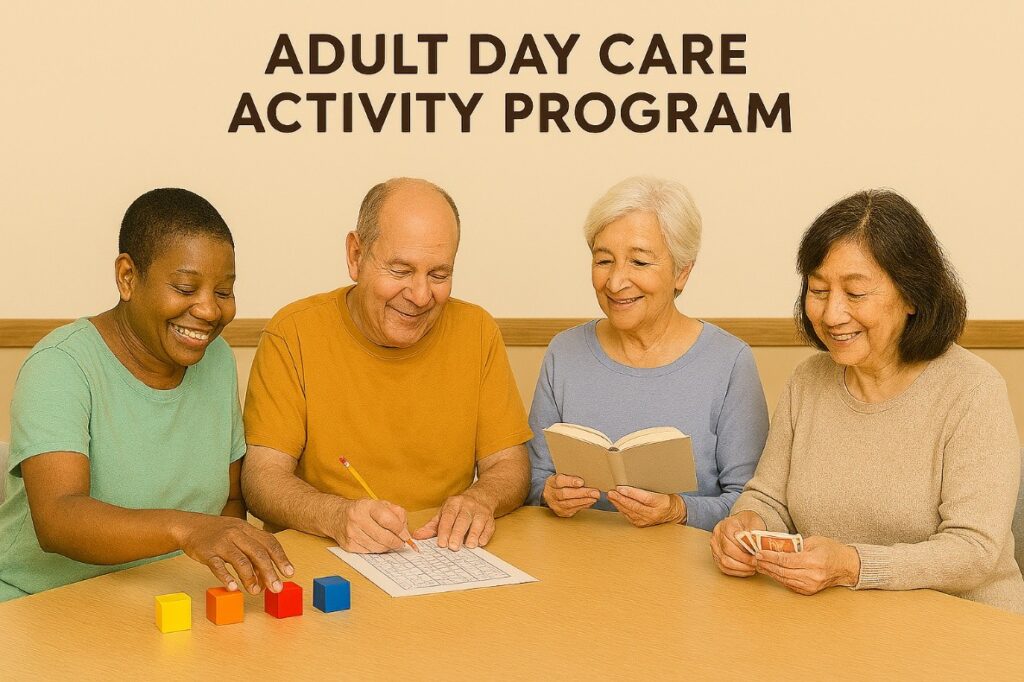
Adult day care programs serve a vital role in supporting older adults and individuals with cognitive, physical, or emotional challenges who benefit from supervised daytime engagement. Beyond supervision, the heart of a successful program lies in meaningful, structured activities that encourage socialization, stimulate the mind, support physical abilities, and reinforce emotional well‑being.
When activities are intentionally designed, they do more than fill time—they promote dignity, maintain functional skills, and create purpose. Structure is especially important for participants dealing with memory impairment, neurological conditions, communication challenges, or limited mobility. A well-rounded activity plan ensures every participant has a way to engage meaningfully, regardless of ability level.
Below are 20 activity ideas, organized into practical categories that adult day care providers can use to diversify their programming and strengthen client engagement.Activities for the Non‑Verbal:
- Activities for the Non‑Verbal:
Participants who communicate primarily through gestures, facial expressions, or assistive communication often respond best to tactile, sensory‑rich tasks.
- Tactile Sorting Trays – Organize items by texture, shape, or color.
- Picture‑to‑Object Matching – Match photos of items to the real objects on the table.
- Sensory Boxes – Soft fabrics, sand, beans, or aromatic items for exploration.
- Guided Art with Stencils – Allows participation without needing verbal direction.
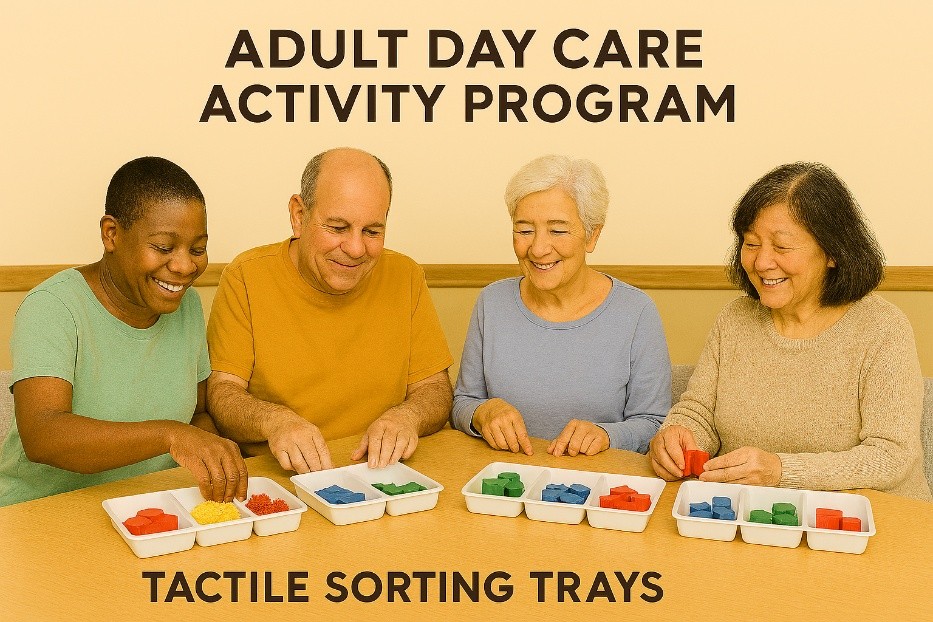
These activities build confidence while reducing frustration associated with language-based tasks.
- Activities for the More Auditory Person:
Those who process information better through listening thrive in sound‑based, rhythm‑based, or spoken-word tasks.
- Story Recall from Short Readings – Participants recall characters or key details.
- Rhythm and Drumming Circles – Simple beats repeated and echoed by the group.
- Name‑That‑Tune Sessions – Using familiar genres or decades.
- Auditory Memory Exercises – Following short spoken sequences such as “clap, tap, clap.”
These reinforce attention, memory, and response timing.
- Activities for the Unfocused or Easily Distracted:
Participants with attention challenges benefit from simple, visually clear activities with short, achievable steps.
- Color‑Coded Puzzles – Minimal pieces, strong visual cues.
- Short Sequencing Tasks – Three‑step picture cards or block-arrangement tasks.
- Guided Breathing and Grounding Exercises – Particularly helpful for anxiety or restlessness.
- Tabletop Bowling or Ring Toss – Quick tasks with easy rewards.
These activities promote calm engagement and structured focus.
- Activities for the Physically Mobile:
Those able to participate in movement benefit from intentional opportunities to exercise safely.
- Chair Yoga or Tai Chi – Gentle, low‑impact stretching and balance movements.
- Group Walking Circuits – Indoors or outdoors, promoting cardiovascular health.
- Balloon Volleyball – Fun, low‑risk activity that supports hand‑eye coordination.
- Dance‑Along Sessions – Using familiar music to encourage spontaneous movement.
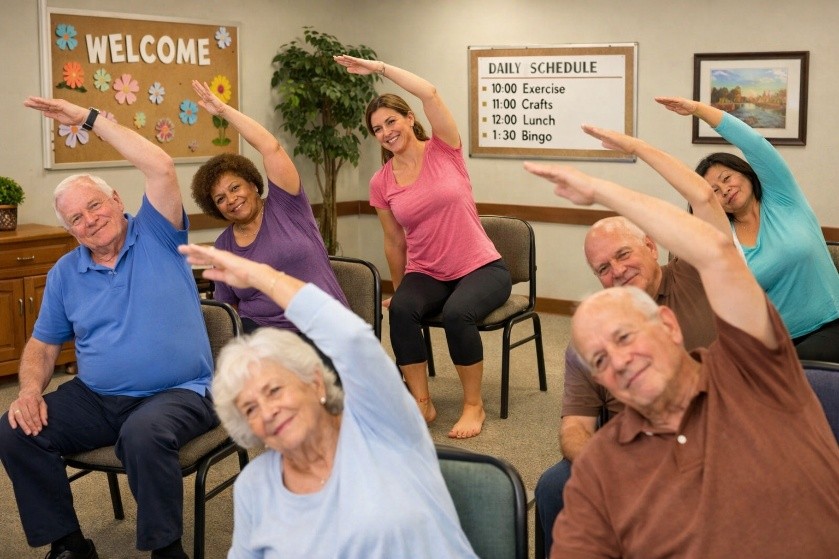
Intentional physical activities help maintain mobility and reduce fall risk.
- Activities for Cognitive Strengthening
These activities reinforce critical thinking, memory, and problem‑solving.
- Sudoku or Number‑Placement Games – Simplified for accessibility when needed.
- Word Association and Category Building – Naming items within specific groups.
- Card Sorting or Matching Games – Suited for all cognitive levels.
- Orientation and Directional Tasks – Using maps, compass sheets, or daily orientation boards.
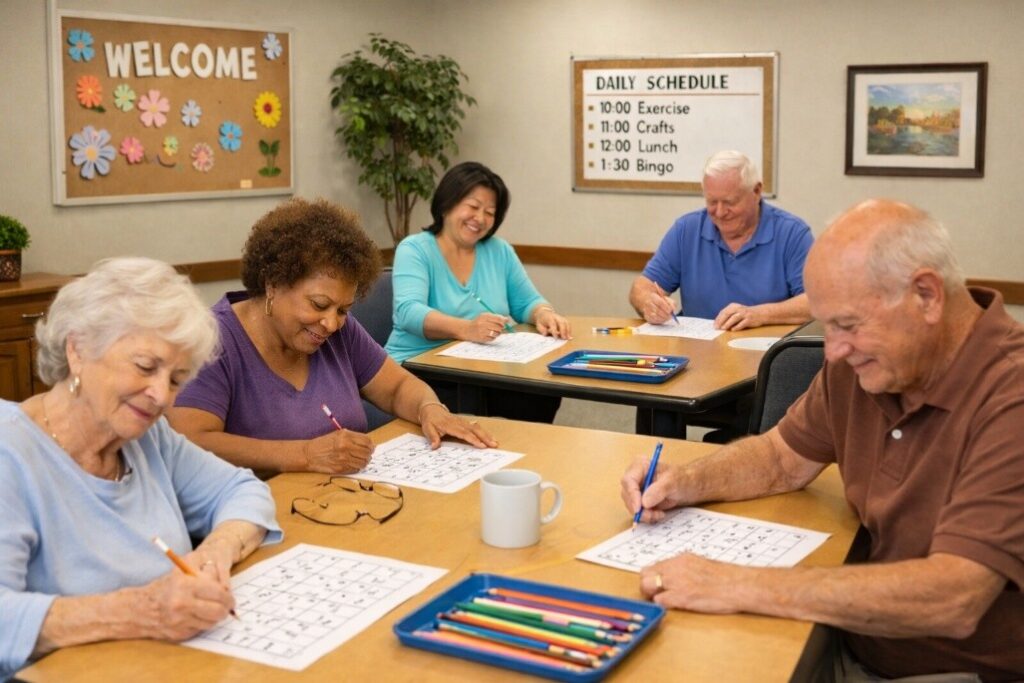
These help maintain cognitive stamina and support neurological rehabilitation goals.
To summarize:
Getting to know a qualified activities coordinator will be of benefit to you. A successful adult day care program adapts to the changing needs of its participants, offering structured activities that support physical, cognitive, emotional, and social wellness. By incorporating a wide range of activity types—tailored to communication styles, attention levels, and mobility—providers create an inclusive environment where every participant can thrive.

Another Blog Post by Direct Care Training & Resource Center, Inc. Photos used are designed to complement the written content. They do not imply a relationship with or endorsement by any individual nor entity and may belong to their respective copyright holders.
| Follow us in the Social Stratosphere… | ||||
|


